Complete Guide to GST Compliance in 2025

Goods and Services Tax (GST) compliance remains a critical aspect of business operations in India. As we move through 2025, several significant changes and enhancements to the GST framework require businesses to stay vigilant and adapt their compliance procedures accordingly. This guide aims to provide a comprehensive overview of GST compliance requirements and best practices for 2025.
Recent Changes in GST Framework
The GST Council has introduced several key modifications to the GST framework in the past year. Understanding these changes is essential for maintaining compliance and optimizing your tax position.
- Expanded e-invoicing requirements for businesses with turnover exceeding ₹5 crore.
- Enhanced validation checks in GSTR-1 and GSTR-3B reconciliation.
- New provisions for input tax credit (ITC) verification and reversal Revised pricing for select goods and services.
- Refunds will be processed more swiftly.
GST Registration Requirements
Businesses with a total turnover that surpasses the established limit must still register for GST. There are, however, situations where registration is compulsory, regardless of turnover.
Turnover Thresholds for Registration
- ₹40 lakh for most goods suppliers across states
- ₹20 lakh for goods suppliers in certain states (Manipur, Mizoram, Nagaland, Tripura)
- ₹20 lakh for service providers nationwide
- No threshold for inter-state suppliers (unless they choose the Composition Scheme)
Mandatory Registration Scenarios
Registration is a must, no matter the revenue, in these cases:
- Inter-state suppliers of goods or services
- Casual taxable persons making taxable supplies
- Persons required to pay tax under reverse charge
- Non-resident taxable persons making taxable supplies
- E-commerce operators and suppliers through e-commerce platforms (with certain exceptions)
- Persons supplying online information and database access or retrieval services from outside India to a non-taxable online recipient
GST Return Filing Calendar
Timely filing of GST returns is crucial for compliance. Here's the updated filing calendar for various GST returns in 2025:
GSTR-1 (Monthly): 11th of the following month
GSTR-1 (Quarterly): 13th of the month following the quarter
GSTR-3B (Monthly): 20th of the following month
GSTR-3B (Quarterly): 22nd/24th of the month following the quarter
GSTR-9 (Annual Return): 31st December of the following <a href="/blog/taxation-and-finance-terms#financial-year" class="glossary-link text-primary" data-term="financial-year" title="Learn more about: financial year" style="text-decoration: underline; cursor: pointer; font-weight: 550" data-glossary-term="financial year">financial year</a>
GSTR-9C (Reconciliation Statement): 31st December of the following financial year
It's important to note that the due dates may be extended by the government in certain circumstances. However, businesses should aim to comply with the original due dates to avoid last-minute complications.
E-Invoicing Compliance
E-invoicing has become a key element of GST compliance for businesses that meet a certain turnover level. Starting in 2025, companies with an aggregate turnover surpassing ₹5 crore in any financial year, beginning with 2017-18, will be required to use e-invoicing.
Key Aspects of E-Invoicing
- The journey starts with the creation of an Invoice Reference Number (IRN), which is done through the Invoice Registration Portal (IRP).
- Next, a QR code is generated for each invoice.
- Real-time validation of the invoice data follows.
- E-invoices then automatically populate your GSTR-1.
- This process also simplifies the tracking and verification of input tax credits.
E-invoicing offers more than just compliance; it's a significant shift for businesses, promoting transparency, cutting down on mistakes, and streamlining the entire invoicing workflow.
Input Tax Credit Management
Effectively managing Input Tax Credit (ITC) is key to reducing your GST liability. The 2025 framework introduces several crucial ITC-related provisions.
ITC Eligibility Criteria
To be eligible to claim Input Tax Credit (ITC), you must meet certain requirements:
- First, you need a tax invoice or debit note issued by a registered supplier. Second, you must have actually received the goods or services. Finally, the tax that was charged needs to have been paid to the government.
- The first step is to file your GSTR-3B for the applicable period.
- Once your supplier has submitted their GSTR-1, the invoice should then show up in your GSTR-2B.
ITC Restrictions and Reversals
There are particular circumstances where ITC isn't permitted, and businesses need to be aware of these to stay compliant:
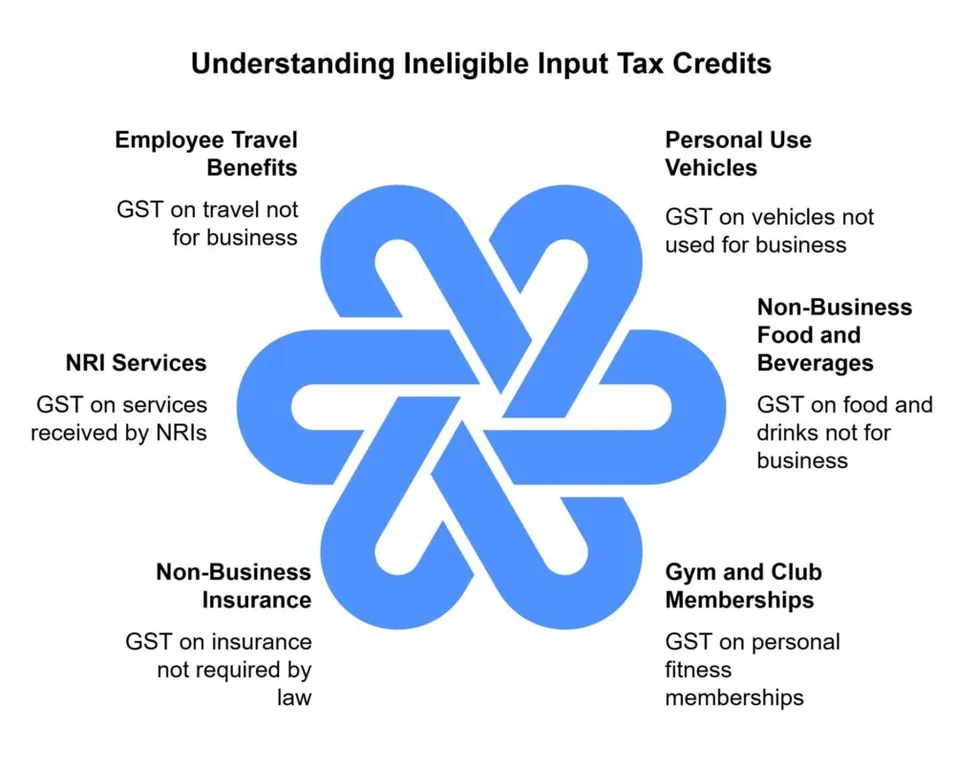
- ITC is not available for motor vehicles and conveyances, with some exceptions.
- Also, ITC is not allowed for food and beverages, outdoor catering, beauty treatments, health services, and similar items.
- Memberships in clubs and health and fitness centers are included.
- Rent-a-cab services, life insurance, and health insurance are also covered, though with specific exceptions.
- Travel perks offered to employees during their vacations are also part of the picture.
- Works contract services tied to the construction of immovable property are included, again with certain exceptions.
- Goods or services meant for personal use are also considered.
- Effective management of Input Tax Credit (ITC) is essential for getting the most out of GST.
Common GST Compliance Pitfalls
Even the most careful businesses can run into trouble with compliance. Here are some common mistakes to avoid:
1. Mismatch in GSTR-1 and GSTR-3B
Differences between GSTR-1, which shows outward supplies, and GSTR-3B, the summary return, can trigger departmental notices and increased scrutiny. Reconciling the figures from both returns is a must before you hit "submit."
2. Incorrect Classification of Goods and Services
Getting the HSN/SAC code or tax rate wrong can lead to either overpaying or underpaying taxes, and that can certainly affect your profits. Keeping your product and service master data up to date with the right classifications is key.
3. Delayed ITC Claims
Input Tax Credit (ITC) claims have a time limit. You can claim Input Tax Credit (ITC) for a financial year up until the due date for submitting GSTR-3B for September of the subsequent year, or the date you file your annual return, whichever comes first.
4. Non-compliance with E-invoicing Requirements
Failing to issue e-invoices when they're needed could lead to penalties. Furthermore, your customers might be unable to claim their input tax credit. A solid e-invoicing system, seamlessly integrated with your ERP, is essential.
GST Audit and Assessment Preparation
Preparing for GST audits and assessments is becoming increasingly complex, driven by data. Getting everything in order ahead of time can prevent a lot of future problems.
Key Documentation for Audit Readiness
- Complete and accurate financial records that clearly trace each transaction.
- Reconciliation of your turnover as reported in financial statements with your GST returns.
- Reconciliation of your input tax credit, as recorded in your books, with your GST returns.
- Documentation for any exempt, nil-rated, or non-GST supplies.
- Records detailing how you classified HSN/SAC codes.
- Documentation for valuing transactions with related parties.
- Proof that you are complying with e-invoicing rules.
- Records of any reverse charge payments and self-invoices.
Technology Solutions for GST Compliance
The efficient management of Goods and Services Tax (GST) compliance is fundamentally reliant on technological advancements. Several technological solutions are currently accessible to optimize various facets of this process:
- Software designed for GST return filing, incorporating validation checks.
- E-invoicing solutions that facilitate integration with Enterprise Resource Planning (ERP) systems.
- Reconciliation tools that enable the matching of purchase records with GSTR-2B data.
- Automated tools for the classification of Harmonized System of Nomenclature (HSN) and Service Accounting Code (SAC) codes.
- GST analytics dashboards, which provide real-time monitoring of compliance status.
- Document management systems, which are essential for maintaining comprehensive audit trails.
The judicious selection of appropriate technology can lead to a substantial reduction in compliance-related expenses, while simultaneously mitigating the potential for errors and associated penalties.
Conclusion
GST compliance in 2025 requires a proactive approach, attention to detail, and leveraging technology effectively. By understanding the latest requirements, implementing robust processes, and staying updated with regulatory changes, businesses can not only ensure compliance but also optimize their tax position.
Remember that GST compliance is not just about avoiding penalties; it's about building a reputation as a responsible business entity and maintaining healthy relationships with your customers and suppliers.
Disclaimer: The information provided in this article is for general guidance only and should not be considered as professional advice. Tax laws and regulations are subject to change, and specific situations may require tailored solutions. Always consult with a qualified tax professional for advice specific to your circumstances.
In Conclusion
Navigating Tax Obligations with Awareness
Section 194B plays a vital role in ensuring the fair taxation of winnings, promoting transparency and preventing tax evasion. By understanding the intricacies of this provision, both winners and organisers can navigate their tax obligations with clarity and confidence. Whether your winnings come from a lottery ticket or a digital contest, being informed is your best defense against tax-related complications.
References
- India Briefing, Divyansh Shrivastava and Melissa Cyrill, 31st March 2025