Complete Guide to GST in India

What is GST?
Goods and Services Tax (GST) compliance remains a critical aspect of business operations in India. As we move through 2025, several significant changes and enhancements to the GST framework require businesses to stay vigilant and adapt their compliance procedures accordingly. This guide aims to provide a comprehensive overview of GST compliance requirements and best practices for 2025.
Structure of GST: CGST, SGST, IGST
- CGST (Central Goods and Services Tax): Levied by the Central Government on intra-state supplies.
- SGST (State Goods and Services Tax): Levied by the State Governments on the same intra-state supplies as CGST.
- IGST (Integrated Goods and Services Tax): Levied by the Central Government on inter-state and international supplies of goods and services.
- UTGST (Union Territory GST): Levied in Union Territories instead of SGST.
| Type | Applicable Tax | Collecetd By |
|---|---|---|
| Within a state (e.g., Mumbai to Pune) | CGST + SGST | Centre + State |
| Between states (e.g., Delhi to UP) | IGST | Centre |
| Imports (e.g., China to India) | IGST | Centre |
Benefits of GST
- Expanded e-invoicing requirements for businesses with turnover exceeding ₹5 crore.
- Enhanced validation checks in GSTR-1 and GSTR-3B reconciliation
- New provisions for input tax credit (ITC) verification and reversal Revised pricing for select goods and services.
- Refunds will be processed more swiftly.
GST Rates and Their Applicability
GST is levied under four major slabs: 5%, 12%, 18%, and 28%, depending on the type of goods or services.
| GST Rate | Category | Goods/Services Examples |
|---|---|---|
| 0% | Exempetd goods | Milk, fresh fruits, vegetables, education services |
| 5% | Basic necessities | Railway tickets, essential medicines, footwear under ₹500 |
| 12% | Standard goods | Mobile phones, fertilizers, fruit juices |
| 18% | Common services/goods | Soap, toothpaste, ACs, restaurant services |
| 28% | Luxury goods | Luxury cars, tobacco, pan masala, aerated drinks |
GST Registration Process
Businesses with turnover exceeding the threshold limit (₹40 lakhs for goods, ₹20 lakhs for services in most states) must register for GST. The process is completely online and free of cost.
- Visit the GST Portal: https://www.gst.gov.in/
- Click on 'Register Now'.
- Fill Part A of the registration with basic details and validate with OTP.
- Receive a Temporary Reference Number (TRN).
- Fill Part B with business details, upload documents (PAN, address proof, bank details, photos).
- Receive ARN (Application Reference Number) after successful submission.
- Get GSTIN and certificate within 3-7 working days.
Filing GST Returns
Registered taxpayers must file regular GST returns. Returns summarize sales, purchases, and tax liability. Most common return forms include:
- GSTR-1 (Monthly): Due by the 11th of the month after the reporting period.
- GSTR-1 (Quarterly): The deadline is the 13th of the month following the quarter's end.
- GSTR-3B (Monthly): This return is due on the 20th of the month after the reporting period.
- GSTR-3B (Quarterly): The deadline is either the 22nd or 24th of the month after the quarter concludes.
- GSTR-9 (Annual Return): This return is due on December 31st of the following financial year.
- GSTR-9C (Reconciliation Statement): The deadline for this is also December 31st of the subsequent financial year.
- It's important to remember that the government sometimes pushes these deadlines back. Still, businesses should strive to hit the initial due dates, which helps sidestep any potential headaches down the road.
Returns are filed via the GST portal using either online forms or offline tools. Late filing attracts penalties and interest.
Understanding GSTIN
GSTIN (Goods and Services Tax Identification Number) is a 15-digit unique number assigned to every registered taxpayer. It is generated based on the taxpayer's PAN and state.
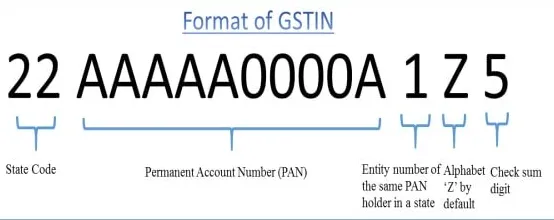
- First 2 digits: State code
- Next 10 digits: PAN of the business
- 13th digit: Entity code
- 14th digit: Blank by default (currently ‘Z’)
- 15th digit: Checksum digit
You can verify any GSTIN on the [GST Portal's Search Tool](https://www.gst.gov.in/). Just enter the GSTIN and confirm the business name, status, and registration type.