
Complete Guide to Investment Options in India: Building Wealth

Reasons to Invest in 2025
India’s economic growth is projected to remain one of the fastest of any country. Making smart investment decisions will be critical to preserving and building wealth since inflation is expected to continue rising, and while it takes significant long-term planning for retirement, funding a child’s education, and/or getting married, the overall investment landscape is changing dramatically.
- Providing for retirement
- Providing for the education and marriage of your children
- Saving on taxes
- Outpacing inflation
- Building a stream of passive income

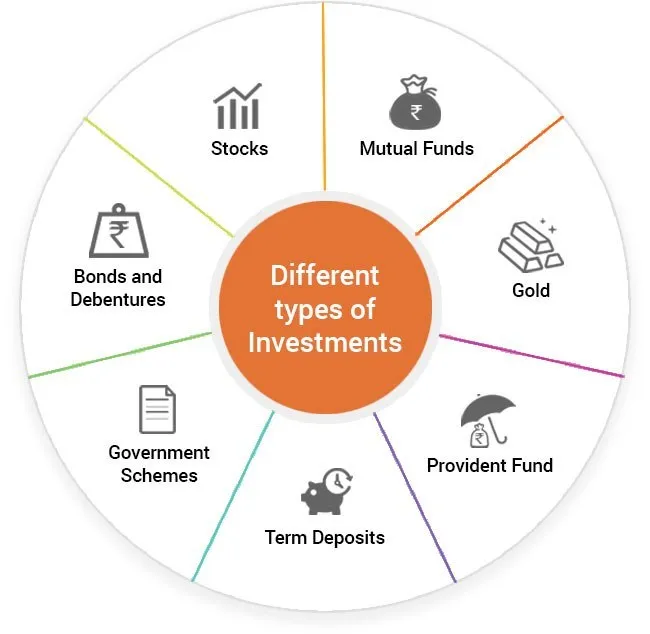
Key Investment Categories
1. Low-risk Fixed Income Investments
- Fixed Deposits (FD): 6%-7.5% per year for 7 days to 10 years; Interest is taxable.
- Public Provident Fund (PPF): 7.1% for 15 years; EEE tax benefit.
- National Savings Certificate (NSC): 7.7% for 5 years; Tax savings for up to ₹80,000 under Section 80C.
- Post Office Monthly Income Scheme (POMIS): 7.4% for 5 years and pays out every month.
2. Market-linked Investments (Moderate to High Risk)
- Stocks and Equities (12%-18% return) - higher risk and have higher liquidity (liquid assets).
- Mutual Funds consist of Equity (Higher Returns), Debt (Lower Risk), and Hybrid investment; best purchased using a Systematic Investment Plan (SIP).
- Exchange-Traded Funds (ETFs) are passive investments with low expense ratios that trade on stock market exchanges.
- Real Estate Investment Trusts (REITs) include income from real estate and the potential for capital appreciation and can be traded on the stock market.
3. Moderately Risky Real Estate Investments
Average returns from real estate range from 7%-12% from rental income and from appreciation in the long term; this is a good way to build wealth over time, but requires a significant amount of capital, as real estate is a relatively illiquid asset, and has an additional risk because of possible changes in local or national laws or regulations.
4. Precious Metals and Gold
- Buying Gold: There are two options for purchasing gold:
- physical gold (which usually has storage risks) or
- sovereign gold bonds (which earn a fixed rate of 2.5% interest per year + potential appreciation), have an 8-year term, and upon maturity, are exempt from taxes.
- Gold ETFs/Digital Gold are easily traded and have no storage costs.
5. Government Schemes
- SCSS- SCSS Gives 8.2%, has a 5-year maturity term, can be opened by anyone who is 60 or older, and qualifies under 80C.
- NPS- NPS Provides long-term market-linked retirement income through a mix of equities and fixed income; up to ₹2 lakh in tax deductions for contributions made into the account (₹1.5 lakh under 80C and ₹50,000 under 80CCD(1B)).
6. Debentures and Bonds
Government bonds are low risk with low yields and corporate bonds usually have very high yields but include the additional risk of defaulting borrowers. Some types of bonds, like RBI Floating Rate Bonds, are not taxed.
7. Alternative Investments
- Cryptocurrency - extremely volatile; 30% income tax plus 1% TDS, and should be invested in very carefully
- Peer-To-Peer Lending - returns of 10-15%, moderate risk of default from the borrower.
Age-Based Investment Strategy
| 20s | High | 80% equity, 20% PPF/gold |
| 30s | High-Moderate | 60% equity, 30% debt, 10% gold |
| 40s | Moderate | 50% debt, 40% equity, 10% gold |
| 50s | Moderate-Low | 60% debt, 30% equity, 10% SGB/REIT |
| 60+ | Low | 70% fixed income, 20% equity, 10% gold |

Tips To Build Wealth In 2025
- Start Early; Use SIP as Regular Investment.
- Spread Your Investments Over A Range of Assets.
- Have 6 To 12 Months of Living Expenses Set Aside As An Emergency Fund.
- Review And Adjust Your Investments To Match The Market Annually
- Utilise All Available Tax Saving Options Under 80C, 80 CCD(1B), Etc.
- Do Not Make Investment Decisions Based On Emotions.
- Review Your Financial Goals Regularly (At Least Annually) And Change Your Strategy As Necessary
Conclusion

In 2025, the secret to building wealth is careful planning, disciplined investing, and using the many financial tools available in India. As a conservative investor or a more aggressive risk-taker, there are multiple strong opportunities in India’s financial markets in 2025 to help you build your wealth over time.